
Are Car Detailing Chemicals Safe for My Family and Pets?
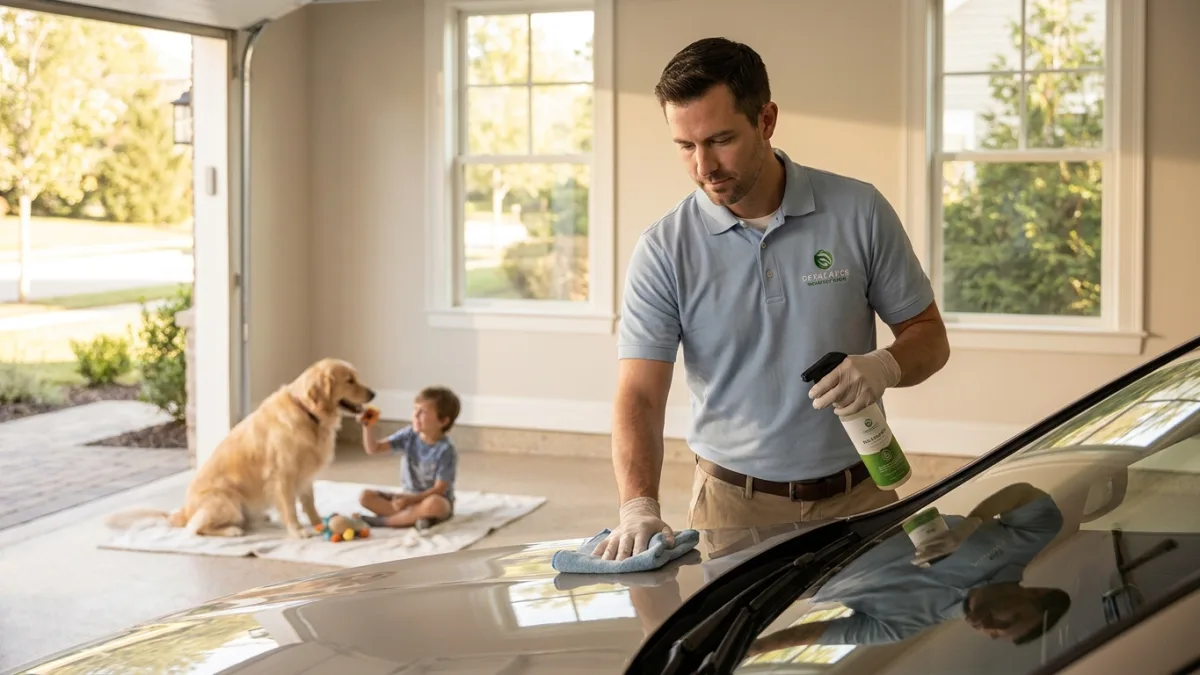
Professional detailing chemicals are safe when applied correctly with proper ventilation and timing.
What You Need to Know
Modern detailing uses pH-balanced, water-based formulas. Professional application with proper ventilation makes chemicals safe within 4-48 hours depending on service type.Protection for Your Pets
Cats lack enzymes to process phenols and essential oils. Dogs and small pets need 24-48 hour ventilation periods before vehicle exposure.Critical Timing
Interior detailing requires minimum 12-24 hours ventilation. Ceramic coatings need 24-48 hours initial cure. Families with infants should extend to 48-72 hours.
If you're concerned about chemical exposure after detailing your vehicle, you're asking the right questions. Professional-grade products differ fundamentally from household cleaners, and understanding proper application protocols and ventilation requirements protects your family and pets while delivering exceptional results.
Understanding Car Detailing Chemical Safety
Chemical Safety Notice
VOCs and solvents need 24-48 hours ventilation before family exposure
Car detailing chemicals are generally safe for families and pets when used correctly, but they require proper handling, application, and ventilation.
Most professional-grade detailing products contain ingredients that can pose risks if misused-including volatile organic compounds (VOCs), surfactants, and solvents. According to Environment and Climate Change Canada, VOC regulations protect the environment and health of Canadians from air pollution effects. The key to safety lies in understanding product formulations, following manufacturer guidelines, and ensuring adequate drying and ventilation time before allowing family members or pets back into treated vehicles.
Modern detailing chemistry has evolved significantly. Many professional services now prioritize pH-balanced formulas, water-based solutions, and biodegradable ingredients that minimize health risks.
However, even eco-friendly products require careful application. The concentration levels used by professionals differ dramatically from consumer-grade products, and the expertise in application techniques significantly impacts safety outcomes.
When you bring your vehicle to a professional detailing service like Sparkle Armor Auto Detailing, trained technicians understand proper dilution ratios, contact times, and ventilation requirements. They apply products in controlled environments and ensure complete removal of chemical residues.
This professional approach substantially reduces exposure risks compared to DIY applications where product misuse is common.
Professional detailing services use commercial-grade ventilation systems and follow strict safety protocols that minimize chemical exposure risks for subsequent vehicle occupants.
The primary concern isn’t whether detailing chemicals are inherently dangerous-it’s whether they’re applied correctly and given adequate time to cure or dissipate before family and pet exposure. Understanding the specific chemical categories used in detailing helps you make informed decisions about vehicle treatment timing and post-service precautions.
Chemical Categories in Auto Detailing
Detailing products fall into distinct chemical families, each with different safety profiles.
Alkaline cleaners (pH 10-14) are used for heavy degreasing and typically contain sodium hydroxide or potassium hydroxide. These are highly effective but require complete rinsing and neutralization.
Acidic cleaners (pH 1-3) remove mineral deposits, brake dust, and oxidation, often containing hydrofluoric or phosphoric acid derivatives.
Solvent-based products include tar removers, adhesive eliminators, and some wax strippers. These contain petroleum distillates or citrus-based d-limonene.
While effective, they require excellent ventilation during application and complete evaporation before interior occupancy.
Surfactant-based cleaners represent the majority of interior detailing products-these are generally safer but still require proper rinsing on surfaces that contact skin.
Polymer sealants and ceramic coatings involve silica-based or siloxane chemistry. During application, these products release alcohols and other carriers that require ventilation.
Once cured (typically 24-48 hours for initial cure, with complete curing taking 1-2 weeks), they form inert protective layers that are chemically stable and safe.
Professional vs. Consumer Product Formulations
Professional detailing chemicals differ fundamentally from retail products in concentration and formulation complexity.
Commercial products are typically sold as concentrates requiring dilution ratios of 10:1 to 50:1, allowing technicians to adjust strength based on contamination levels. This concentration means improper use poses greater risks, but proper dilution and application by trained professionals actually increases safety.
Consumer products are pre-diluted for convenience but often contain additional fragrance compounds, colorants, and preservatives that can trigger allergic reactions or respiratory sensitivity. These additives serve marketing purposes rather than cleaning efficacy.
Professional-grade formulations typically minimize unnecessary additives, focusing on active cleaning ingredients.
The buffering systems in professional products also differ. Commercial formulations include pH stabilizers and chelating agents that improve rinsing characteristics and reduce residue formation.
This chemistry expertise ensures that when a professional completes a detail, chemical residues are minimized far beyond what typical consumer application achieves.
Health Risks for Different Family Members
Chemical Categories
5 types- 1 Alkaline cleaners (pH 10-14) for degreasing
- 2 Acidic cleaners (pH 1-3) for mineral deposits
- 3 Solvent-based products for tar and adhesives
- 4 Surfactant-based cleaners for interiors
- 5 Polymer sealants and ceramic coatings
Chemical sensitivity varies dramatically across family members based on age, size, and physiological factors. Understanding these differences helps you make informed decisions about post-detailing vehicle use timing.
Infant and Child Vulnerability
Children are more vulnerable than adults to chemicals found in the environment because children typically have a higher intake of air, water and food in relation to their body weight, according to Health Canada.
They breathe more air per kilogram than adults. Their developing organ systems, particularly neurological and endocrine systems, show greater sensitivity to chemical disruption.
Additionally, children’s hand-to-mouth behaviors increase ingestion risks from residual chemicals on interior surfaces.
Infants in rear-facing car seats spend extended periods with their faces near seat fabrics and plastics. If interior detailing products aren’t completely dried and off-gassed, infants experience concentrated exposure in their breathing zone.
This proximity concern makes proper ventilation timing critical for families with young children.
Exposure to certain environmental chemicals during pregnancy or early childhood, when they may be sensitive to developmental effects, may result in negative effects on children’s health.
While acute toxicity from properly applied detailing chemicals is unlikely, minimizing exposure during critical developmental windows represents prudent precautionary practice.
Young children have faster breathing rates and breathe in more pollutants relative to their body weight than adults.
For families with infants or toddlers, requesting water-based interior products and allowing a minimum 48-hour ventilation period before reinstalling car seats provides an additional safety margin. Professional detailers can accommodate these requests when informed of family circumstances.
Pregnant Women Considerations
Pregnancy introduces specific chemical sensitivity concerns, particularly during the first trimester when organogenesis occurs. Certain solvents and VOCs can cross the placental barrier, and while the concentrations from properly detailed vehicles are unlikely to reach concerning levels, minimizing unnecessary exposure aligns with standard prenatal care guidelines.
Glycol ethers, found in some glass cleaners and degreasers, have demonstrated reproductive toxicity in animal studies at high exposure levels. Most modern detailing formulations have eliminated these compounds, but older or budget products may still contain them.
Professional services using current-generation chemistry avoid these legacy ingredients.
The heightened sense of smell many women experience during pregnancy can make even low-level chemical odors uncomfortable or nausea-inducing. This physiological response doesn’t necessarily indicate toxicity but does affect comfort.
Requesting fragrance-free or low-odor product formulations addresses this concern without compromising cleaning effectiveness.
Pregnant women should avoid direct participation in DIY detailing that involves prolonged exposure to product vapors in enclosed spaces. If a professionally detailed vehicle retains noticeable chemical odors, extending ventilation time by 24-48 hours before regular use provides additional precaution.
Elderly and Immunocompromised Individuals
Aging affects chemical metabolism and clearance rates. Older adults may experience reduced hepatic and renal function, slowing the body’s ability to process and eliminate absorbed chemicals.
While exposure levels from detailed vehicles rarely approach clinically significant thresholds, individuals with compromised detoxification systems benefit from extended off-gassing periods.
Chronic respiratory conditions like COPD, asthma, or pulmonary fibrosis increase sensitivity to airborne irritants. Even low concentrations of VOCs or residual fragrance compounds can trigger respiratory symptoms in susceptible individuals.
For these family members, specifying hypoallergenic, fragrance-free interior products prevents unnecessary respiratory stress.
Immunocompromised individuals-whether from medical conditions or immunosuppressive medications-may show heightened sensitivity to microbial growth that can occur if interior surfaces aren’t properly dried after wet cleaning. Professional detailing includes thorough drying protocols, but verifying complete dryness before use by vulnerable family members adds a safety layer.
Individuals undergoing chemotherapy often experience heightened chemical sensitivity and nausea triggers. For these family members, timing vehicle detailing during treatment-free intervals and ensuring exceptional ventilation prevents adding to their symptom burden.
Pet-Specific Chemical Hazards
- Concentrated formulas
- 10:1 to 50:1 dilution
- Minimal additives
- pH stabilizers included
- Pre-diluted convenience
- Added fragrances
- Marketing colorants
- Extra preservatives
Pets interact with vehicle interiors differently than humans, creating unique exposure pathways that require specific safety considerations. Their behavioral patterns, physiological differences, and inability to communicate discomfort necessitate extra precautions.
Canine Exposure Pathways
Dogs experience vehicle chemical exposure through inhalation, dermal contact, and oral ingestion from licking paws and fur after vehicle travel. Their closer proximity to floor surfaces-where heavier chemical vapors settle-increases inhalation exposure compared to human passengers.
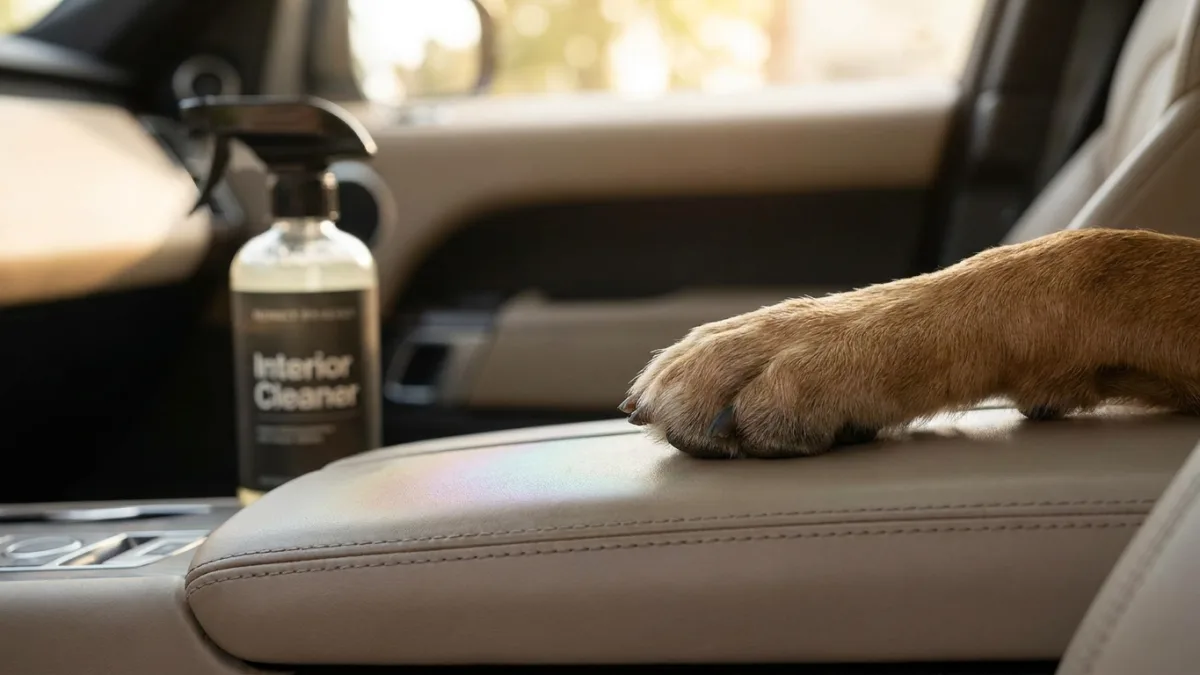
Dogs also lack the sweat glands humans use for some chemical elimination, relying more heavily on respiratory and hepatic clearance.
According to the ASPCA Animal Poison Control Center, 8.3% of pet poison calls involve household cleaning products.
Certain detailing chemicals pose specific canine toxicity risks. Quaternary ammonium compounds (quats), common in antimicrobial interior cleaners, can cause oral irritation and gastrointestinal upset if dogs lick treated surfaces before complete drying.
Phenolic compounds, found in some heavy-duty cleaners, can be toxic to dogs, though they metabolize these compounds better than cats.
Dogs with pushed-in faces (brachycephalic breeds like bulldogs and pugs) already experience compromised respiratory function. These breeds show greater sensitivity to airborne irritants, making thorough ventilation before their vehicle exposure especially important.
Their breathing difficulties mean even mild respiratory irritants can cause significant distress.
The size differential matters significantly. A Chihuahua weighing five pounds has dramatically different chemical exposure thresholds than a German Shepherd weighing eighty pounds. For small dog owners, the precautionary principle suggests treating chemical exposure concerns similarly to those for human infants.
Feline Sensitivity Factors
Cats possess unique metabolic vulnerabilities that make them extraordinarily sensitive to certain chemical classes. According to research published in Veterinary Clinics: Small Animal Practice, cats lack UGT1A6 and UGT1A9 enzymes, which glucuronidate phenolic drugs in other species.
This deficient glucuronidation pathway means cats cannot efficiently process phenols, essential oils, and certain other compounds that dogs and humans metabolize readily.
Pine oil cleaners, tea tree oil-based products, and phenol-containing disinfectants represent serious feline toxicity risks. The CDC specifically warns that phenols are very toxic to cats.
Even residual amounts on surfaces cats might contact can cause progressive toxicity because cats cannot efficiently eliminate these compounds. Symptoms may not appear immediately but can accumulate with repeated exposure.
Cats groom extensively, spending up to 50% of waking hours on self-grooming. This behavior means any chemical residue on their paws or fur from vehicle surfaces gets directly ingested.
Unlike dogs, who may drink water frequently, cats often have lower fluid intake, potentially concentrating absorbed toxins.
Feline asthma affects between 1 and 5% of cats, and affected cats show marked sensitivity to airborne irritants and fragrances. For cat-owning families, requesting fragrance-free, essential oil-free interior detailing products prevents triggering respiratory episodes.
Professional detailers can easily accommodate these specifications when informed.
Cats lack UGT1A6 and UGT1A9 enzymes that glucuronidate phenolic compounds in other species, making them highly susceptible to the toxic side effects of many chemicals.
Exotic Pets and Small Animals
Rabbits, ferrets, birds, and other small pets that might travel in vehicles face disproportionate chemical exposure risks due to their high metabolic rates and small body mass.
Birds possess uniquely efficient respiratory systems-while advantageous for flight, this efficiency means airborne toxins are absorbed more rapidly and completely than in mammals.
Avian respiratory toxicity represents a serious concern with certain detailing chemicals. Birds lack the hepatic enzyme systems to metabolize many VOCs, and their air sac system means inhaled compounds contact respiratory membranes more extensively than in mammalian lungs.
Historically, miners used canaries to detect toxic gases because birds succumb to airborne toxins at concentrations mammals tolerate-this sensitivity persists in pet birds.
Non-stick coating fumes (PTFE/Teflon) are famously toxic to birds, and while not typically used in auto detailing, some fabric protectants contain fluoropolymers with similar chemistry. For bird owners who transport pets in vehicles, verifying that fabric treatments are fluoropolymer-free prevents this specific risk.
Small mammals like ferrets and rabbits have rapid respiratory rates and high surface-area-to-volume ratios, increasing both inhalation and dermal absorption relative to body weight. These pets also tend to be ground-dwelling, maximizing exposure to heavier-than-air chemical vapors that settle in floor areas.
Safe Application Practices and Protocols
Proper application methodology transforms potentially hazardous chemicals into safe, effective detailing solutions. The difference between safe and risky detailing lies not in the chemicals themselves but in the expertise and protocols governing their use.
Proper Dilution and Product Selection
Concentration control represents the foundational safety principle in professional detailing. Commercial products designed for 20:1 dilution become unnecessarily harsh and potentially unsafe at 5:1, while over-dilution at 50:1 may require multiple applications, extending exposure time.
Professional detailers maintain calibrated dilution systems ensuring consistent, appropriate concentrations.
Product selection should match both the cleaning task and the safety requirements of vehicle occupants. For families with young children or pets, professionals can substitute harsher alkaline degreasers with enzymatic cleaners for organic stains, or replace solvent-based products with surfactant alternatives that offer similar performance with reduced volatility.
pH-neutral products (pH 6-8) minimize both surface damage and health risks for routine maintenance cleaning. Alkaline and acidic products should be reserved for specific contamination types and always followed by pH-neutral rinses that eliminate residual reactive chemistry.
This neutralization step is frequently skipped in DIY detailing but is standard protocol in professional services.
Biodegradable formulations are formulated using natural ingredients that eschew harsh chemicals such as ammonia, bleach, and petroleum distillates, opting instead for plant-based surfactants and natural solvents.
However, biodegradable products don’t automatically mean “non-toxic”-many natural compounds like d-limonene (citrus-derived) are biodegradable but still require ventilation during use. Biodegradable products typically break down into less harmful compounds and rinse away more completely, reducing long-term residue concerns.
Ventilation Requirements by Product Type
Different detailing chemicals require specific ventilation approaches based on their volatility and vapor characteristics.
Solvent-based products (tar removers, adhesive eliminators, wax strippers) demand cross-ventilation during application and for 2-4 hours afterward. These products release VOCs that are heavier than air, so ground-level ventilation (open doors) proves more effective than relying solely on windows.
Water-based interior cleaners require less intensive ventilation but still benefit from air circulation to accelerate drying. Damp interior surfaces can promote microbial growth if not dried properly, creating a different health concern than chemical exposure.
Professional detailing bays use forced-air systems that dry interiors in 30-60 minutes versus the 4-8 hours typical with passive drying.
Ceramic coating and paint sealant applications release alcohols and other carriers during curing. While these products cure to inert finishes, the curing period (typically 24-48 hours for initial cure) requires ventilation.
Vehicles should remain in well-ventilated areas during this period, not enclosed garages where vapor concentrations can build.
Ozone treatments, sometimes used for odor elimination, require special protocols. Ozone is a respiratory irritant even at low concentrations, and vehicles must be completely unoccupied during treatment and thoroughly ventilated afterward.
Professional services using ozone follow strict timing and ventilation protocols, ensuring complete dissipation before vehicle return.
Professional detailing facilities use commercial-grade ventilation systems that provide significantly better air exchange than residential garages, allowing faster and more complete dissipation of chemical vapors.
Surface Contact Time and Residue Management
Chemical effectiveness depends on appropriate dwell timethe period a product remains on surfaces before removal. Insufficient dwell time reduces cleaning efficacy, potentially requiring reapplication and extending total exposure.
Excessive dwell time can allow products to dry on surfaces, making removal difficult and increasing residue formation.
Professional detailers follow manufacturer-specified contact times, typically 30 seconds to 5 minutes for most cleaning products. They use timers and systematic approaches ensuring each section receives appropriate treatment.
This precision prevents both the inefficiency of premature removal and the residue problems of over-extended contact.
Residue removal requires different approaches for different product types. Surfactant-based cleaners require thorough rinsing or extraction with clean water-simply wiping with a damp cloth often redistributes rather than removes residue.
Professional extractors apply clean rinse water and immediately vacuum it away, achieving residue removal impossible with consumer equipment.
Polymer-based protectants (tire dressings, trim restorers) should be applied sparingly and buffed to remove excess. Over-application creates sticky surfaces that attract dust and can transfer to clothing or pet fur.
The professional approach uses minimal product and complete buffing, creating the desired appearance without tactile residue.
Interior surfaces that contact skin-steering wheels, door handles, gear shifters-deserve special attention for residue removal. These high-touch surfaces should be treated with products that leave zero tactile residue and undergo final wiping with clean, damp microfiber cloths to ensure complete cleaning product removal.
Post-Detailing Safety Measures
Children's Vulnerability
Children are more vulnerable than adults to chemicals because they have higher intake of air, water and food relative to body weight.
Health CanadaThe period immediately following detailing requires specific precautions to maximize safety while allowing you to enjoy your refreshed vehicle. These measures bridge the gap between professional application and normal family use.
Optimal Ventilation Periods
Minimum ventilation times vary by service type and products used. For exterior-only detailing (wash, wax, tire dressing), vehicles are generally safe for immediate use since chemical exposure occurs outside the occupant cabin.
However, if strong product odors are noticeable when entering the vehicle, additional ventilation is warranted.
Interior detailing requires more conservative timing. For basic interior cleaning with water-based products, allowing 4-6 hours of ventilation with windows cracked provides adequate off-gassing time for most families.
This period allows both chemical dissipation and complete drying, preventing the musty odors that can develop from damp upholstery.
Comprehensive interior detailing involving carpet extraction, upholstery shampooing, and leather conditioning benefits from 12-24 hours of ventilation. While the products themselves may be safe within hours, complete moisture removal prevents mold and mildew development that poses its own health risks.
Professional detailing services using commercial drying equipment can safely reduce this timeline.
For families with chemical sensitivities, infants, or pets, extending ventilation to 48-72 hours provides an additional safety margin. This conservative approach ensures complete dissipation of even trace amounts of volatile compounds.
During this period, park vehicles outdoors or in well-ventilated garages rather than enclosed spaces where vapors might concentrate.
Ceramic coating applications require the longest post-service ventilation-typically 24-48 hours for initial cure, with full curing taking up to 2-3 weeks. During the initial cure period, keep windows slightly open (weather permitting) and avoid enclosed parking.
The coating cures to an inert, chemically stable finish, but the curing process releases alcohols and other carriers that require dissipation.
Surface Testing Before Family Use
Before resuming normal family use, especially with young children or pets, simple surface verification tests provide peace of mind. Run a clean, white cloth across interior surfaces-any color transfer or sticky residue indicates incomplete product removal requiring additional cleaning.
The smell test remains valuable despite its subjectivity. Fresh, clean vehicles should smell neutral or carry only faint product scents. Strong chemical odors, solvent smells, or overpowering fragrances suggest inadequate ventilation time.
Trust your nose-if it smells strongly chemical, it likely needs more ventilation time.
For leather surfaces, perform a touch test. Properly conditioned leather should feel supple and slightly moisturized but not greasy or sticky. Excess leather conditioner that hasn’t been buffed away will transfer to clothing and can cause skin irritation in sensitive individuals.
If leather feels tacky, wipe with a clean, dry microfiber cloth.
Moisture verification is critical for mold prevention. Press a dry cloth firmly into carpet and upholstery crevices-it should come away dry or barely damp. Significant moisture retention 6-8 hours after interior detailing indicates inadequate drying.
Extend ventilation time and consider using portable fans to accelerate drying.
For families with pets, pay special attention to floor areas where pets will lie. These surfaces receive the most direct contact with pet skin and are most likely to be licked during grooming.
Running a damp cloth over these areas as a final rinse removes any residual product that might have been missed during professional cleaning.
Gradual Reintroduction Strategies
Rather than immediately returning to normal vehicle use with the entire family, a staged reintroduction approach minimizes risk while allowing you to assess any unexpected sensitivities.
Begin with short trips by adults only, monitoring for any unusual odors or symptoms like headaches or eye irritation.
If adult use for 24 hours produces no concerns, gradually introduce children and pets for progressively longer periods. Start with a 15-minute drive, then extend to 30 minutes, then normal use.
This graduated approach allows early detection of any sensitivity issues before extended exposure occurs.
For pet reintroduction, consider initial trips without allowing the pet to lie down on detailed surfaces. Keep them in a carrier or on a blanket for the first few trips, then allow normal contact.
Monitor for excessive licking of paws, sneezing, or behavioral changes that might indicate chemical sensitivity.
Families with members who have known chemical sensitivities should consider a test period where the sensitive individual sits in the parked, ventilated vehicle for 10-15 minutes before driving.
This static exposure allows assessment without the complication of motion sickness or the inability to immediately exit if discomfort occurs.
Document any reactions or concerns during reintroduction. If symptoms occur, extend ventilation time and contact the detailing service to identify which products might have triggered the response.
Professional services can adjust their product selection for future detailing to avoid repeat issues.
Eco-Friendly and Low-Toxicity Alternatives
Cat Owners Warning
Pine oil, tea tree oil, and phenol-containing products are highly toxic to cats
The detailing industry has developed numerous reduced-risk formulations that maintain cleaning effectiveness while minimizing health and environmental concerns. Understanding these alternatives helps you make informed service requests.
Water-Based vs. Solvent-Based Products
Water-based formulations use water as the primary carrier for active ingredients, dramatically reducing VOC emissions compared to solvent-based alternatives. Modern surfactant technology allows water-based products to achieve cleaning performance that previously required solvents, particularly for interior applications.
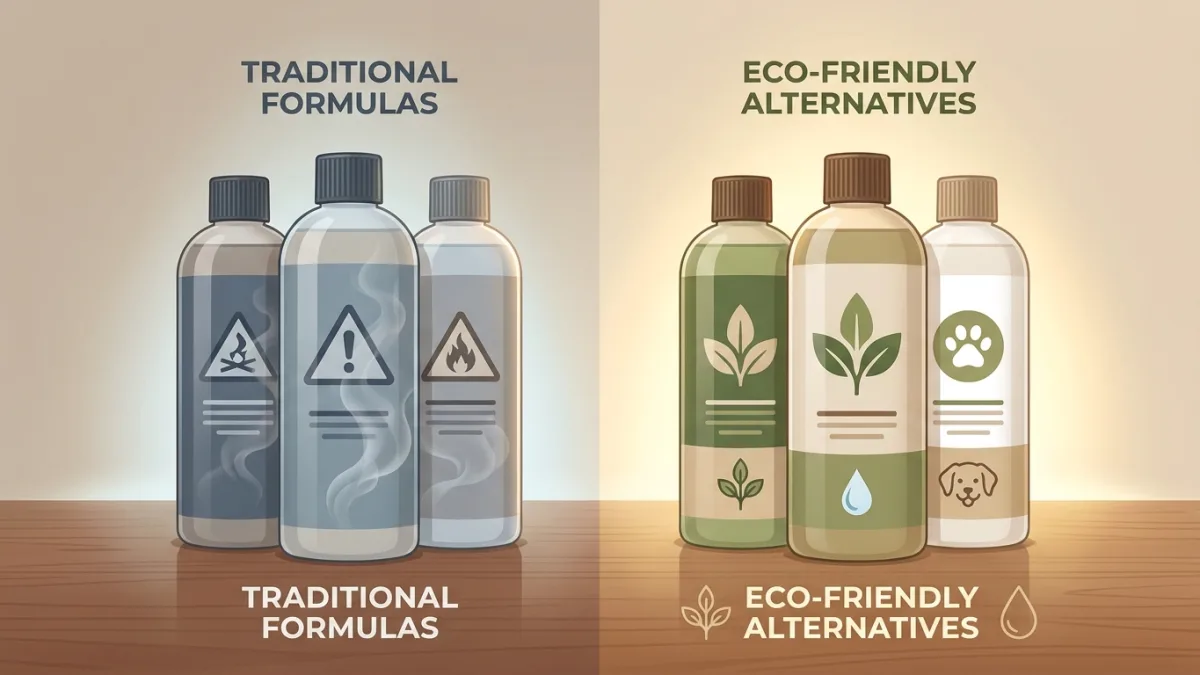
The primary advantage of water-based products lies in their reduced inhalation hazard. While they still contain active cleaning ingredients that require proper handling, they don’t release the volatile organic compounds that create strong odors and require extensive ventilation.
This characteristic makes them particularly suitable for families with respiratory sensitivities.
However, water-based products aren’t universally superior. Some contamination types-particularly petroleum-based substances like tar, tree sap, or adhesive residues-respond more effectively to solvent-based removers.
The professional approach uses water-based products as the primary cleaning method, reserving solvent-based products for specific spot treatments where they’re genuinely necessary.
Solvent-based products retain important roles in professional detailing despite their higher volatility. They excel at dissolving non-polar contaminants and typically evaporate completely without residue.
When used in well-ventilated environments by trained technicians who apply minimal quantities precisely where needed, their risk profile becomes acceptable even for safety-conscious families.
The optimal approach combines both technologies: water-based products for general cleaning and solvent-based products for targeted applications. This hybrid methodology, standard in professional detailing, maximizes both safety and effectiveness rather than dogmatically adhering to one product category.
Plant-Derived and Biodegradable Formulations
Bio-based detailing products derive active ingredients from renewable plant sources rather than petroleum. Common bio-based ingredients include surfactants from coconut and corn, solvents from citrus and soy, and enzymes from bacterial fermentation.
These products offer comparable performance to synthetic alternatives with improved biodegradability.
Citrus-based cleaners containing d-limonene provide excellent degreasing performance and pleasant natural scents. However, “natural” doesn’t automatically mean “non-toxic”-d-limonene requires the same ventilation considerations as synthetic solvents and can cause skin irritation in concentrated form.
The advantage lies in its rapid biodegradation and lower aquatic toxicity compared to petroleum solvents.
Enzymatic cleaners use naturally occurring enzymes to break down organic stains like food, blood, and pet accidents. These products work slower than harsh chemical cleaners but offer exceptional safety profiles.
They’re non-toxic, biodegradable, and effective at eliminating odor sources rather than masking them. For families with young children or pets, enzymatic cleaners represent an ideal choice for organic stain removal.
Soy-based products provide another plant-derived alternative, particularly for adhesive removal and heavy degreasing. Soy methyl esters effectively dissolve sticky residues while maintaining low toxicity and high biodegradability.
These products work more slowly than aggressive solvents but achieve similar results with significantly reduced health and environmental impact.
The limitation of bio-based products lies in their sometimes slower action and higher cost. Professional detailers using these formulations may require slightly longer service times, and the products themselves typically cost more than synthetic equivalents.
For safety-conscious families, this trade-off often represents excellent value.
pH-Neutral and Hypoallergenic Options
pH-neutral products (pH 6-8) minimize both surface damage and health risks. Unlike alkaline or acidic cleaners that can cause skin irritation and require careful handling, neutral-pH formulations safely contact skin and don’t require neutralization after use.
They’re particularly appropriate for routine maintenance cleaning where heavy contamination isn’t present.
The chemistry of pH-neutral cleaning relies on surfactant technology rather than chemical reactivity. Surfactants work by reducing surface tension, allowing water to penetrate and lift soils mechanically rather than dissolving them chemically.
This mechanism provides effective cleaning without the corrosive potential of reactive chemistry.
For leather care, pH-neutral cleaners prevent the gradual degradation that can occur with repeated use of alkaline products. Leather’s natural pH ranges from 4.5 to 5.5, and maintaining products close to this range preserves the material’s integrity and appearance over time.
Professional leather care almost exclusively uses pH-balanced formulations.
Hypoallergenic products eliminate common sensitizers including fragrances, dyes, and certain preservatives. These formulations specifically target individuals with chemical sensitivities, asthma, or allergic tendencies.
While “hypoallergenic” lacks regulatory definition, reputable manufacturers formulate these products without the 26 fragrance allergens identified by EU regulations.
Fragrance-free doesn’t mean odorless-products still carry the inherent scent of their active ingredients. However, eliminating added fragrances removes a common trigger for respiratory symptoms and headaches.
For families with sensitivities, requesting fragrance-free products should be standard practice when scheduling detailing services.
| Product Category | Safety Profile | Best Applications | Ventilation Needed | Pet Safety |
|---|---|---|---|---|
| Water-based surfactants | High | General interior cleaning | Minimal (2-4 hours) | Safe when dry |
| Solvent-based cleaners | Moderate | Tar, adhesive, heavy grease | Extensive (4-8 hours) | Avoid contact |
| Enzymatic cleaners | Very High | Organic stains, odors | Minimal (1-2 hours) | Very safe |
| pH-neutral formulas | High | Routine maintenance | Minimal (2-4 hours) | Safe when dry |
| Citrus-based (d-limonene) | Moderate | Degreasing, freshening | Moderate (3-6 hours) | Safe when dry |
| Ceramic coatings | Moderate during cure | Paint protection | Extensive (24-48 hours initial) | Safe after cure |
Professional vs. DIY Safety Considerations
Ventilation Timeframes
4 levels- 1 Exterior only: Immediate use safe
- 2 Basic interior: 4-6 hours minimum
- 3 Full interior detail: 12-24 hours
- 4 Ceramic coating: 24-48 hours initial cure
The safety differential between professional detailing and DIY approaches extends beyond product selection to encompass equipment, expertise, and environmental controls that fundamentally affect chemical exposure risks.
Equipment and Extraction Capabilities
Professional detailing facilities employ commercial-grade extractors that apply cleaning solutions and immediately vacuum them away along with dissolved contaminants. These machines achieve water recovery rates of 90-95%, compared to the 60-70% typical of consumer carpet cleaners.
This superior extraction dramatically reduces drying time and residual chemical presence.
Heated extraction further enhances safety by accelerating both cleaning effectiveness and drying. Professional extractors heat water to 150-210°F, allowing lower chemical concentrations to achieve better results.
The heat also accelerates evaporation, reducing the moisture retention that can lead to mold growth-a health concern distinct from but related to chemical exposure.
Professional facilities use ventilation systems designed specifically for chemical use, providing substantially better air exchange than residential garages. This enhanced ventilation means professional facilities dissipate chemical vapors much more quickly than home settings, reducing overall exposure time.
Personal protective equipment (PPE) used by professionals-including nitrile gloves, respiratory protection for certain applications, and eye protection-reflects the reality that even relatively safe products require careful handling during application.
DIY detailers often skip PPE, increasing their exposure to concentrated products.
The quality of microfiber towels and applicators affects residue management. Professional-grade microfiber with split fiber technology removes products more completely than consumer-grade alternatives.
This seemingly minor detail significantly impacts whether chemical residues remain on surfaces after cleaning.
Training and Application Expertise
Professional detailers receive training in product chemistry, dilution ratios, and application techniques that directly impact safety outcomes. They understand which products can be safely mixed, which require separate application, and which combinations create hazardous reactions.
This knowledge prevents dangerous mistakes common in DIY applications.
Contamination assessment skills allow professionals to select the minimum effective product strength, avoiding the “more is better” approach that increases both cost and risk. They recognize when a pH-neutral cleaner will suffice versus when stronger chemistry is genuinely necessary, minimizing chemical use while maintaining results.
Understanding material compatibility prevents damage and safety issues. Certain leather types react poorly to alkaline cleaners, some plastics degrade with solvent exposure, and various fabric protectants aren’t suitable for all upholstery types.
Professionals match products to materials, preventing reactions that can release unexpected fumes or create residues.
Systematic application methods ensure complete coverage without over-application. Professionals work in defined sections, applying consistent amounts and timing. DIY approaches often involve uneven application-over-applying in some areas (creating residue) while missing others (requiring reapplication and extending exposure time).
The ability to recognize adverse reactions during application allows professionals to adjust approaches mid-service. If a product isn’t rinsing cleanly or appears to be reacting unexpectedly with a surface, trained detailers switch products or techniques.
DIY detailers often persist with problematic approaches, compounding issues.
Cost-Benefit Analysis of Professional Service
Professional detailing in Canada typically costs between $150 and $400 for comprehensive interior and exterior service, depending on vehicle size and condition. This investment includes not just labor but also the safety infrastructureproper ventilation, extraction equipment, and product expertise-that DIY approaches cannot replicate.
The time value of professional service extends beyond convenience. A comprehensive detail requires 4-8 hours of work time. DIY attempts often extend to 10-15 hours due to less efficient equipment and techniques.
This extended timeframe means prolonged chemical exposure for the person performing the work and delayed vehicle availability for family use.
Product cost for DIY detailing appears lower initially but often proves comparable when accounting for product waste, purchases of multiple products to find effective solutions, and replacement of damaged materials from incorrect product selection.
Professionals buy concentrated commercial products at wholesale prices and use them efficiently.
The risk mitigation value of professional service is difficult to quantify but substantial. Professional detailers carry liability insurance covering adverse reactions or damage from their services. They also possess the expertise to avoid the application errors that create safety issues.
DIY approaches place all risk on the vehicle owner.
For families with high-risk membersinfants, individuals with respiratory conditions, chemically sensitive persons, or multiple pets-professional service represents particularly strong value. The enhanced safety protocols, superior ventilation, and product expertise directly address the factors that create greatest concern for these families.
Professional detailing services complete chemical applications in controlled environments with commercial equipment, substantially reducing total chemical exposure time compared to DIY approaches.
When DIY Approaches Are Appropriate
Routine maintenance washing between professional details suits DIY approaches well. Using pH-neutral car wash soap, adequate water for rinsing, and proper drying techniques involves minimal chemical exposure and maintains appearance between professional services.
This approach reserves professional detailing for comprehensive cleaning 2-4 times annually.
Exterior-only DIY work poses minimal family and pet safety concerns since chemicals are applied outside the occupant cabin. Washing, waxing, and tire dressing can be safely performed at home with consumer products, provided you follow basic safety practices like wearing gloves and ensuring children and pets aren’t in the immediate area.
Simple spot cleaning of minor interior spills using appropriate products represents reasonable DIY territory. Keeping a bottle of pH-neutral interior cleaner and microfiber cloths for immediate spill response prevents stains from setting while avoiding the chemical exposure of comprehensive interior detailing.
However, DIY approaches should avoid heavy contamination requiring aggressive chemistry, comprehensive interior extraction, or specialty applications like ceramic coatings. These applications benefit substantially from professional equipment and expertise, and attempting them at home increases both safety risks and the likelihood of unsatisfactory results.
For families committed to DIY detailing, investing in proper equipment-particularly a quality extractor for interior work-and thoroughly researching product selection and application techniques substantially improves both safety and outcomes.
However, this investment often exceeds the cost of 2-3 professional details, making the economic case for DIY questionable unless you detail multiple vehicles frequently.
Frequently Asked Questions
Most car detailing chemicals can be safe when used properly, though some can irritate pets. In 2026, biodegradable cleaning agents are increasingly preferred by professional detailers, keeping vehicles safer from harsh chemicals while preserving protective surfaces. Always ensure you’re working in a well-ventilated area to avoid inhaling fumes, and wear gloves to shield your skin from harsh chemicals.
Common toxic ingredients include ammonia, bleach, chlorine, formaldehyde, and isopropyl alcohol. Phenol is highly toxic to cats, and if you have cats at home, the CDC recommends avoiding cleaners with this ingredient entirely. According to the ASPCA Animal Poison Control Center, 8.3% of pet poison calls involve household cleaning products. Keep all detailing chemicals stored securely away from pets.
Chemical exposure is a significant concern in auto detailing. Many detailing chemicals can cause skin irritation or dermatitis, so professionals must consistently wear appropriate protective gear, including gloves and long-sleeved shirts, to minimize skin contact. Chemical fumes from cleaning products and polishes can quickly turn your workspace into a hazardous environment, making proper ventilation a critical safety measure to protect your respiratory health.
Equal parts distilled white vinegar and water in a spray bottle creates a safe all-purpose cleaner. White vinegar, baking soda, and lemon are excellent natural cleaners that can be mixed with water or sprinkled on carpets before vacuuming to neutralize odors. Professional detailers also rely on nontoxic natural cleaners such as Simple Green, which has been certified by Safer Choice, an EPA Pollution Prevention program.
Many disinfectants are toxic when wet but safe once dry. When cleaning the carpet or using hard surface floor cleaners, do not let your pet walk on or sleep in the space until the surface is totally dry and there is no product odor left. Look for biodegradable, non-toxic, and pH-balanced car shampoos and cleaners, while avoiding products with harsh chemicals like phosphates, ammonia, and bleach.
Modern eco-friendly formulas have bridged the performance gap with traditional products. These car detailing products are environmentally safe because they are manufactured using natural and biodegradable materials. Eco-friendly products are formulated without harsh toxins, making them safer for detailers and car owners, and are typically plant-based and non-toxic, offering peace of mind while ensuring professional-grade results.
Immediate veterinary guidance is critical if exposure is suspected. If you suspect your dog or cat ingested a cleaning product, contact your veterinarian or Animal Poison Control immediately at (888) 426-4435. Keep the product within reach so you can quickly provide details as requested to emergency responders.