
1
Vacuum
Remove loose debris from surfaces

Master professional Tesla care techniques for Canadian conditions.
Your Tesla's white seats and premium finish deserve expert-level protection, especially in harsh Canadian winters. I've compiled proven techniques from professional detailers to help you maintain that showroom appearance while avoiding costly mistakes. You'll learn safe cleaning methods, optimal detailing schedules, and whether ceramic coating truly pays off in our climate.
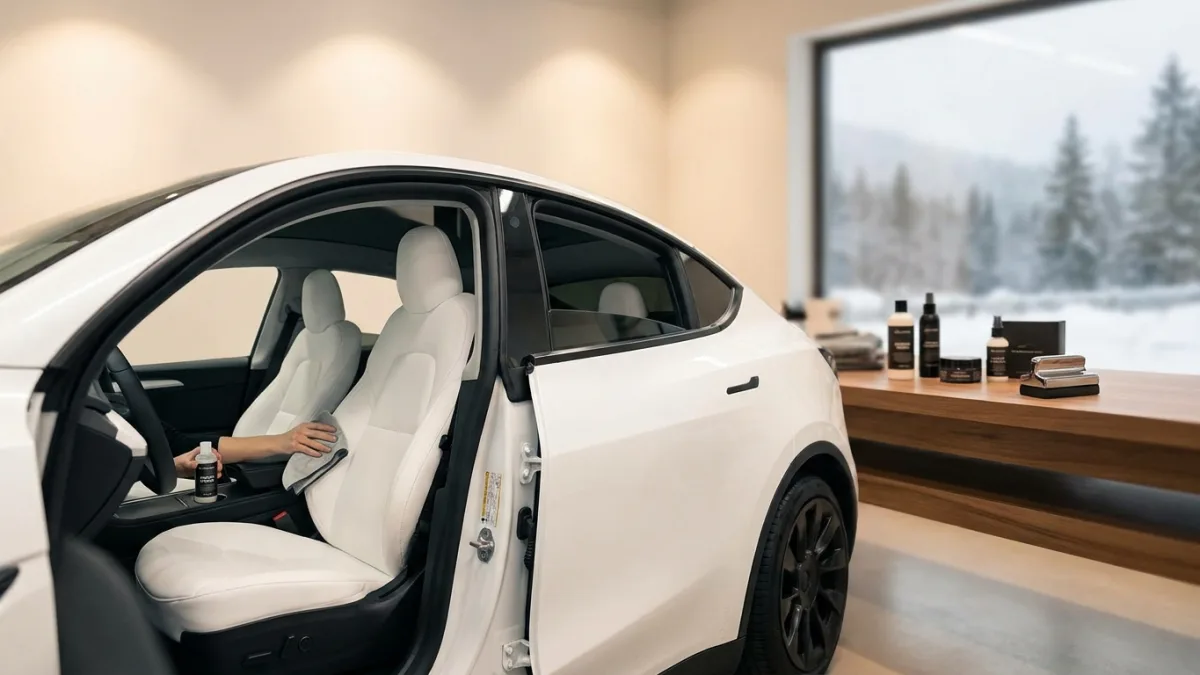
Tesla’s white vegan leather seats are stunning but notoriously challenging to maintain. The synthetic material, while more sustainable than traditional leather, attracts dirt, denim transfer, and stains more readily than darker alternatives. To clean Tesla white seats safely, use a pH-neutral cleaner specifically designed for synthetic leather, a microfiber cloth, and gentle circular motions-never harsh chemicals or abrasive brushes that can damage the protective coating. This comprehensive guide covers everything from routine maintenance to deep cleaning techniques, plus protection strategies to keep your seats looking showroom-fresh through Canadian winters and beyond.
Tesla uses a proprietary synthetic leather material across all white seat options, from the Model 3 to the Model X. This material consists of a polyurethane coating over a fabric backing, designed to mimic leather’s appearance while offering improved durability and easier cleaning than genuine leather.
According to Tesla’s official owner’s manual, the white seats are “coated with an anti-soiling treatment” but remain prone to dye-transfer which can cause discoloration. The manual specifically warns that “using detergents or commercially available leather cleaners and conditioners is not recommended because they can discolor or dry out the leather.”
The material’s structure means it doesn’t absorb liquids like fabric seats, which is advantageous for spill cleanup. However, this same characteristic makes surface stains more visible and allows oils from skin, clothing, and products to accumulate on the surface rather than being absorbed.
Your cleaning toolkit should include:
Products to absolutely avoid:
Professional detailers recommend pH-balanced formulas specifically designed for synthetic leather, which gently remove oils, dirt, and grime without drying out the material or affecting its color.
Critical Warning: Using prohibited products may void Tesla’s warranty coverage for seat damage. Always test any new product on an inconspicuous area first.
Weekly maintenance cleaning (5-10 minutes) prevents buildup and extends the time between deep cleans:
Denim transfer is the most common complaint among Tesla white seat owners. The indigo dye from jeans migrates to the seat surface, creating blue-gray discoloration that worsens over time without intervention.
For denim transfer removal:
Apply a slightly stronger concentration of your pH-neutral cleaner (5:1 ratio) to a microfiber cloth. Work the stained area using small circular motions, applying moderate pressure for 30-60 seconds. The key is persistence rather than aggressive scrubbing-multiple gentle cleaning sessions are safer than one harsh attempt. Rinse thoroughly and repeat daily until the transfer fades, which typically takes multiple treatments for moderate staining.
For food and beverage stains:
Address spills immediately for best results. Blot (never rub) fresh spills with a clean, dry microfiber cloth to absorb as much liquid as possible. Then follow the routine cleaning process. For dried stains, allow your cleaning solution to sit on the stain for 2-3 minutes to break down the residue before gentle wiping.
For makeup and oil-based stains:
These require a specialized approach. Use a cleaner specifically formulated for oil removal on synthetic leather. Apply to a cloth, work the stain gently, then immediately follow with a water rinse to prevent the oil from spreading. Multiple light treatments work better than one aggressive session.
| Stain Type | Treatment Method | Typical Removal Time | Prevention Strategy |
|---|---|---|---|
| Denim Transfer | pH-neutral cleaner, moderate pressure, circular motion | Multiple daily treatments | Seat covers, protective coating, light-colored clothing |
| Coffee/Tea | Immediate blotting, standard cleaning solution | Single treatment if fresh | Cup holders, careful consumption habits |
| Makeup | Oil-specific cleaner, gentle application | 2-3 treatments | Remove before entering vehicle, protective barrier |
| Ink/Pen | Isopropyl alcohol (spot test first), immediate action | Variable, may be permanent | Secure pens in console, avoid loose items |
| Food Grease | Degreasing synthetic leather cleaner | 2-4 treatments | Avoid eating in vehicle, use seat protectors |
Perform deep cleaning every 3-4 months or when routine maintenance no longer achieves satisfactory results. This process takes 45-60 minutes for a complete vehicle.
According to professional detailing experts, cleaning and conditioning every 3-4 months helps maintain that “fresh, soft, and protected leather look all year long.”
Pre-cleaning preparation:
Park in a shaded area or garage to prevent cleaning solutions from drying too quickly in direct sunlight. Ensure the vehicle is cool to the touch. Remove all items from seats and thoroughly vacuum all surfaces, including under seats and in crevices.
Deep cleaning process:
Professional Tip: Deep cleaning is the ideal time to apply ceramic coating or other protective treatments, as the surface is thoroughly clean and prepared for maximum adhesion.
Remove loose debris from surfaces
Apply solution with circular motions
Wipe with dampened cloth
Pat dry with microfiber towel
These products can void Tesla's warranty and cause permanent damage to seat material
In Canada, professional ceramic coating for Tesla Model 3 and Model Y ranges from $499.99 for 2-3 years to $999.99 for 5 years of protection. The cost of ceramic coating ranges from $1,000 to $6,000, depending on the size of the vehicle and the level of surface preparation required. The final cost depends on your vehicle’s size, paint condition, and the time and expertise required for proper application.
Professional ceramic coatings last between 2 and 5 years, depending on the product used, environmental conditions, and maintenance quality. With proper care using pH-neutral shampoos and avoiding harsh chemicals, premium coatings can provide protection for years, offering reduced maintenance and peace of mind knowing your paint is protected. High-quality professional formulas can last up to 5+ years with proper care.
Tesla owners should schedule a professional detail every 3 months, plus a light wash every 1-2 weeks. Because Teslas rely on cameras and sensors for navigation, keeping the exterior clean is essential for functionality, not just cosmetics. Detailers typically recommend returning every 4-6 months for a full detail and before winter to protect against harsh seasonal conditions.
During winter months, pay extra attention to cleaning road salt accumulation from the undercarriage and interior. Tesla’s white vegan leather seats demand extra care due to their susceptibility to staining, with denim transfer being a particularly common issue requiring regular attention. Regular cleaning and conditioning every 3-4 months helps maintain that fresh, soft, and protected leather look all year long.
Current members can snag a FREE Window Ceramic Coating with the purchase of any full in-out detailing service. Enjoy incredible clarity and protection all season long! ❄️